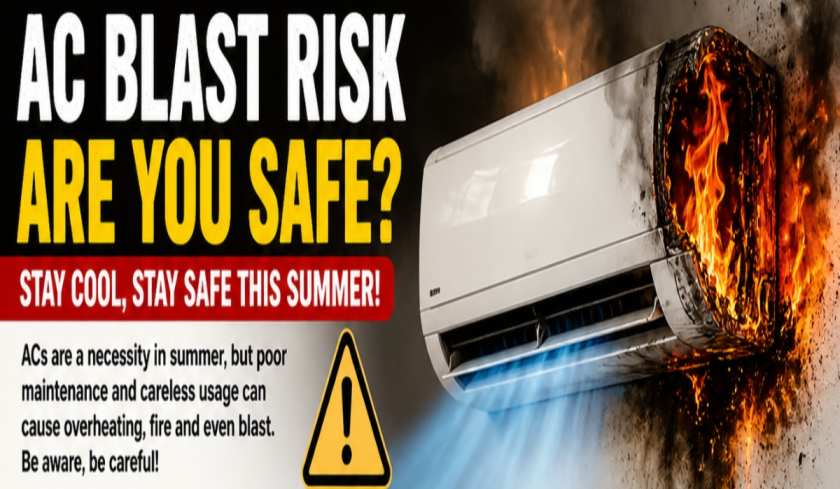
With temperatures soaring every year, air conditioners have become a necessity in Indian homes. But recently, rising reports of AC blast incidents and electrical fires have sparked concern. Many people are now asking: Can your AC really be dangerous?
The truth is—ACs are generally safe, but poor maintenance and faulty setups can turn them risky. Let’s break it down in a simple, practical way.
What Is an AC Blast?
An AC blast usually refers to a situation where an air conditioner overheats, catches fire, or explodes due to internal failure. This doesn’t mean the AC literally explodes like a bomb—it’s often a fire caused by electrical or mechanical issues.
Main Causes of AC Fire or Blast
1. Poor Electrical Wiring
Cheap or damaged wiring is one of the biggest reasons behind AC fires. Overloading circuits can lead to overheating.
2. Lack of Regular Servicing
Dust accumulation, clogged filters, and worn-out components increase strain on the AC, raising the risk of malfunction.
3. Overuse in Extreme Heat
Running the AC continuously for long hours—especially during peak summer—can cause overheating.
4. Old or Faulty Units
Older AC units with outdated parts are more prone to breakdown and electrical faults.
5. Low-Quality Installation
Improper installation, especially by untrained technicians, can create serious safety risks.
Important Reality Check
Let’s keep things grounded:
AC blasts are rare.
Millions of ACs run safely every day.
Most incidents happen due to neglect, poor maintenance, or substandard electrical work—not normal usage.
AC Safety Tips You Should Follow
Regular Servicing
Get your AC serviced at least 2 times a year to keep it clean and efficient.
Use Proper Wiring & Stabilizer
Ensure your home has high-quality wiring and use a stabilizer if voltage fluctuates.
Avoid Continuous Overuse
Give your AC short breaks instead of running it non-stop for 10–12 hours.
Check for Warning Signs
- Burning smell
- Strange noises
- Frequent power trips
If you notice any of these, switch off immediately and call a technician.
Install with Professionals
Always choose certified technicians for installation and repairs.
Why AC Usage Increases Risk in Summer
During extreme heat:
- AC compressors work harder
- Power consumption increases
- Electrical load rises
This combination can stress the system, especially if maintenance is poor.
AC Safety Checklist (Quick Guide)
| Factor | Safe Practice |
|---|---|
| Servicing | Twice a year |
| Wiring | High-quality, properly grounded |
| Usage | Avoid 24/7 continuous use |
| Installation | Professional technician only |
| Monitoring | Watch for unusual signs |
Air conditioners are not dangerous by default—but carelessness can make them risky. A well-maintained AC with proper installation is completely safe and essential for surviving harsh summers.