



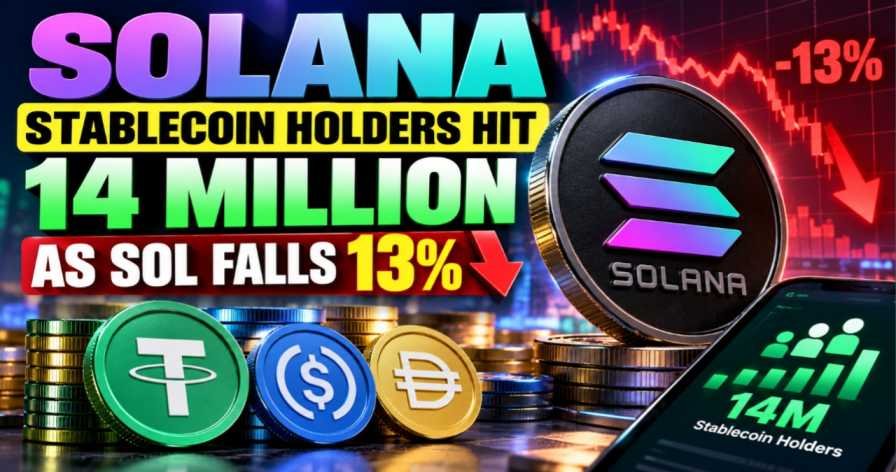
Solana stablecoin holders reached 14 million as stablecoin supply topped $15 billion. Discover why SOL fell 13% and what could drive recovery.
The number of Solana stablecoin holders has increased significantly, reaching approximately 14 million holder addresses in October 2026. This marks substantial growth from fewer than 4 million addresses in October 2024, highlighting the expanding use of stablecoins across the Solana ecosystem.
However, this adoption milestone has not translated into stronger price performance for Solana’s native cryptocurrency, SOL. The token has declined by nearly 13% over the past 30 days, raising questions about whether growing stablecoin adoption can support a sustainable market recovery.
According to data cited by AMBCrypto and Blockworks, Solana’s stablecoin supply remains above $15 billion. This liquidity could support payments, trading and decentralized finance (DeFi) activity, although the number of holders alone does not guarantee increased network usage.
Solana Stablecoin Holders Increase as Adoption Expands
The growth in Solana stablecoin holders accelerated during 2025 and gained further momentum in 2026. The number of holder addresses surpassed 10 million before reaching approximately 14 million in October.
This expansion suggests that more blockchain addresses are gaining access to dollar-pegged digital assets on Solana. Stablecoins can be used for transfers, trading, decentralized applications and other financial activities without the same direct price fluctuations associated with cryptocurrencies such as SOL.
Solana’s stablecoin supply exceeding $15 billion also provides a substantial liquidity base for its ecosystem.
Nevertheless, an increase in holder addresses does not necessarily mean that the network has gained the same number of unique, active users. Some individuals may control multiple addresses, while other holders may keep their assets inactive.
For Solana stablecoin holders to contribute meaningfully to long-term network growth, the increase in adoption must translate into consistent transactions, greater DeFi participation and stronger demand for blockchain services.
Stablecoin Exchange Flows Show Mixed Signals
Despite the growth in Solana stablecoin holders, stablecoin flows across the broader cryptocurrency market indicate that fresh trading capital has not consistently entered exchanges.
Data cited in the source shows several substantial stablecoin deposit and withdrawal movements since June 2025. These fluctuations suggest that investors have repeatedly changed their trading positions and liquidity preferences.
Reported peak inflows reached approximately $2.8 billion, potentially providing exchanges with additional funds to facilitate cryptocurrency purchases.
However, subsequent withdrawals offset some of these inflows. In April, withdrawals reportedly reached approximately $2.3 billion, demonstrating that capital entering exchanges did not establish a consistently positive trend.
More recently, stablecoin netflows approached neutral territory, with the latest reported reading at approximately -$8.2 million.
This relatively balanced flow environment suggests that immediate buying pressure may remain limited unless more capital moves steadily into trading platforms.
Although Solana stablecoin holders continue to increase, the direction of exchange flows remains an important factor in assessing whether available liquidity could translate into stronger cryptocurrency demand.
SOL Price Falls Nearly 13% Despite Strong Stablecoin Supply
The expansion of Solana stablecoin holders has not prevented SOL from experiencing a significant price decline.
According to the supplied market data, SOL was trading around $101–$102 after losing nearly 13% over the previous 30 days. At the same time, weekly decentralized exchange (DEX) trading volume on Solana decreased by approximately 9%.
These figures indicate that the network’s substantial stablecoin supply has not yet produced stronger trading activity across its decentralized exchanges.
The reported stablecoin supply stood at approximately $15.65 billion, but available liquidity and actual market participation are two different measures.
A large stablecoin balance can provide the potential for future trading activity. However, it does not automatically generate buying pressure for SOL or guarantee that investors will move their funds into riskier digital assets.
For the SOL price to recover sustainably, market participants may need to see improving trading volumes, stronger network engagement and a more supportive overall cryptocurrency market environment.
Solana DeFi Activity Remains an Important Indicator
Beyond stablecoin supply and exchange flows, decentralized finance activity provides another way to evaluate the Solana ecosystem.
The supplied data placed Solana’s total value locked (TVL) at approximately $5.77 billion, while daily network fees were reported at around $477,000.
TVL measures the value of assets deposited in DeFi protocols, whereas network fees provide an indication of activity that generates fees on the blockchain.
These metrics help illustrate the difference between the amount of capital available in an ecosystem and the economic activity generated by that capital.
For Solana stablecoin holders to contribute to sustained network growth, greater participation in lending, decentralized exchanges, payments and other on-chain services could become important.
If DeFi engagement and transaction activity improve, Solana could benefit from more effective use of its existing liquidity. Conversely, continued declines in trading volume and limited fee growth could make it harder for SOL to gain sustained upward momentum.
Can Solana Stablecoin Holders Drive a SOL Price Recovery?
The rising number of Solana stablecoin holders represents a notable adoption trend, but its effect on SOL’s price will depend on how users deploy their assets.
Three factors could help determine whether this growth translates into stronger network demand.
1. Higher Trading Volume
An increase in decentralized exchange volume could indicate that more stablecoins are being used for trading rather than remaining idle in wallets.
2. Stronger DeFi Participation
Greater engagement with lending platforms, liquidity pools and other decentralized financial applications could improve the productive use of capital across Solana.
3. Sustained Capital Inflows
Consistent stablecoin inflows into exchanges and other trading venues could improve market liquidity. However, inflows alone would not guarantee that investors purchase SOL.
The broader cryptocurrency market, investor sentiment and SOL-specific demand will also influence price performance.
Therefore, the growth in Solana stablecoin holders should be viewed as a positive adoption indicator rather than a direct signal that a SOL price recovery is imminent.
Disclaimer: This article is for informational and educational purposes only and should not be considered financial or investment advice. Cryptocurrency prices are volatile, and readers should conduct their own research before making investment decisions.