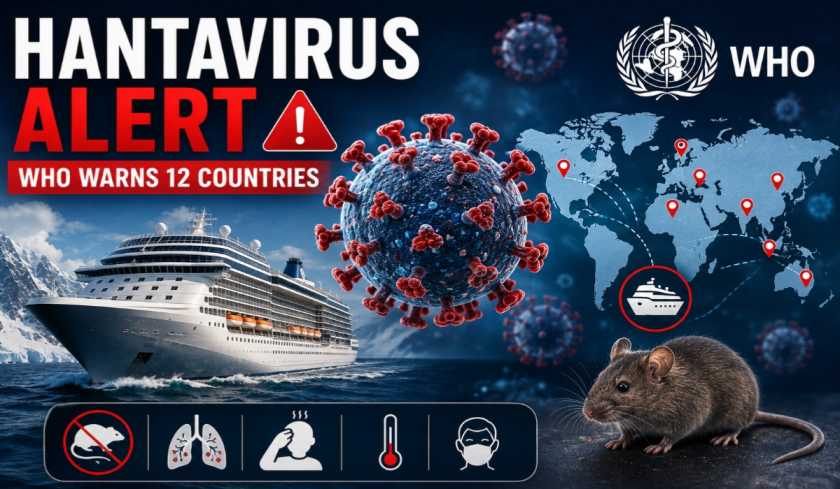
Hantavirus outbreak triggers WHO alert across 12 countries after confirmed cruise ship cases in the South Atlantic. Know symptoms, transmission, travel risks, and safety tips for travellers.
Hantavirus Outbreak Raises Global Health Concerns
A growing hantavirus outbreak linked to a South Atlantic cruise ship has prompted global concern after the World Health Organization (WHO) issued alerts involving 12 countries. The incident has drawn international attention after several passengers reportedly developed severe respiratory illness during a remote expedition cruise near Antarctica and isolated Atlantic islands.
Health officials say the overall public risk remains low, but the situation highlights how quickly infectious diseases can become international concerns in modern travel networks.
WHO Issues Alert to 12 Countries
The WHO and multiple health agencies are now monitoring passengers, crew members, and possible exposure routes connected to the cruise ship outbreak.
Countries Linked to the Hantavirus Outbreak
- United States
- United Kingdom
- Canada
- Germany
- Sweden
- Switzerland
- Denmark
- Singapore
- Türkiye
- Netherlands
- New Zealand
- Saint Kitts and Nevis
Authorities in these countries are currently involved in surveillance, passenger monitoring, medical coordination, or contact tracing efforts.
What Happened on the Cruise Ship?
The cruise reportedly departed from Ushuaia in early April 2026 and travelled through remote South Atlantic regions including Antarctica and nearby islands.
Initially, passengers experienced symptoms such as:
- Fever
- Fatigue
- Body aches
- Digestive problems
- Weakness
However, some cases later progressed rapidly into severe respiratory complications, raising alarms among onboard medical teams. Several passengers were isolated after symptoms worsened during the voyage.
Experts believe the illness pattern resembles Hantavirus Pulmonary Syndrome (HPS), a rare but potentially life-threatening disease.
What Is Hantavirus?
Hantavirus is a rare viral infection primarily spread through contact with infected rodents or exposure to their urine, saliva, or droppings.
Humans can become infected by:
- Breathing contaminated dust particles
- Touching infected rodent waste
- Staying in poorly ventilated areas with rodent exposure
- Visiting remote wilderness regions
Unlike some other viral outbreaks, hantavirus does not usually spread easily between humans.
Hantavirus Symptoms
The symptoms of hantavirus often begin like a normal flu but can become serious very quickly.
Early Symptoms
- Fever
- Muscle pain
- Fatigue
- Headache
- Nausea
- Vomiting
Severe Symptoms
- Shortness of breath
- Lung fluid buildup
- Respiratory distress
- Low blood pressure
- Shock
Doctors say severe cases may require ICU treatment and oxygen support.
Why This Hantavirus Outbreak Is Significant
Health experts say the biggest concern is the international travel setting. Cruise ships create enclosed environments where illnesses can spread more easily and tracking passengers becomes difficult.
Key Reasons for Concern
- International travellers from multiple countries were onboard
- Long incubation period complicates monitoring
- Remote travel locations delayed medical response
- Passenger movement across borders increases surveillance challenges
WHO has reportedly stated that the overall global threat remains low, but authorities continue active monitoring due to the international nature of the outbreak.
What Travellers Should Know
Experts emphasize that hantavirus infections remain extremely rare, especially among regular tourists. However, travellers visiting wilderness regions should stay cautious.
Travel Safety Tips During Hantavirus Outbreak
Avoid Rodent Exposure
Stay away from areas showing signs of rodent activity, especially cabins, campsites, or storage areas.
Maintain Proper Ventilation
Open doors and windows before entering closed spaces in remote regions.
Practice Good Hygiene
Wash hands frequently and avoid touching contaminated surfaces.
Monitor Health After Travel
Travellers returning from affected regions should watch for symptoms for several weeks.
Seek Medical Help Immediately
Early medical attention can improve survival chances in severe cases.
Areas Where Risk May Be Higher
Health experts say the risk may increase in:
- Remote hiking destinations
- Camping sites
- Wilderness expeditions
- Rural lodges
- Cruise expeditions near isolated regions
Urban travellers are considered at much lower risk.
Global Travel Health Concerns Increase
The hantavirus outbreak has once again highlighted how quickly health concerns can cross international borders through modern tourism and cruise travel. While authorities continue investigations, health agencies worldwide are focusing on preventive surveillance and passenger safety measures.
Experts continue to advise calm, stating that the virus is rare and currently not considered a major global pandemic threat.