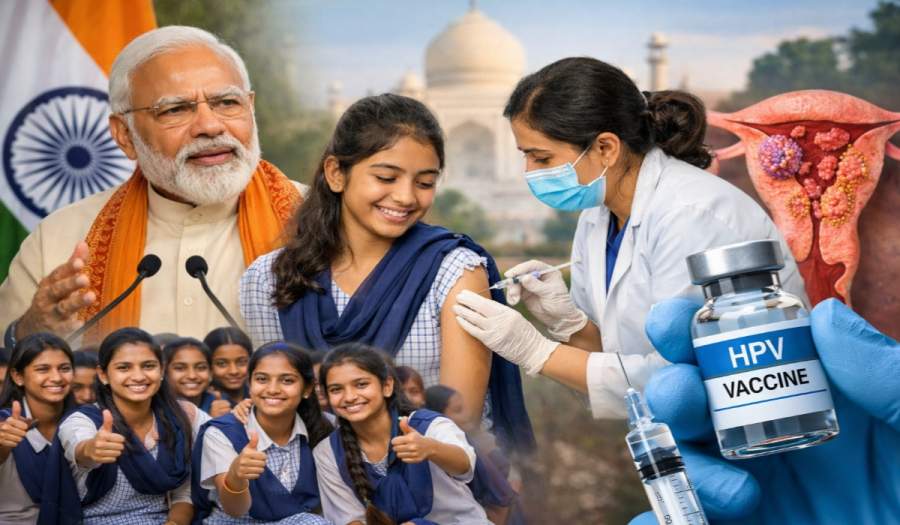
HPV Vaccination Drive 2026 launched by PM Narendra Modi aims to prevent cervical cancer in India. Know benefits, safety facts, and truth behind viral vaccine misinformation.
HPV Vaccination Drive 2026: A Big Step for Women’s Health in India
India has taken a historic step in healthcare as launched the nationwide HPV vaccination drive on 28 February 2026 from Ajmer, Rajasthan.
This initiative is aimed at protecting young girls, especially around the age of 14, from cervical cancer, one of the most common and deadly cancers among women in India.
The campaign by the focuses on early prevention by administering the vaccine before exposure to the virus.
What is HPV and Why is This Vaccine Important?
HPV (Human Papilloma virus) is a common infection that can lead to serious diseases, including cervical cancer. According to health data:
- Over 1.2 lakh cervical cancer cases are reported annually in India
- Around 80,000 deaths occur every year
- HPV is responsible for the majority of these cases
Vaccination at an early age can prevent up to 90% of cervical cancer cases, making this campaign a life-saving initiative.
Why the Government is Focusing on 14-Year-Old Girls
The HPV vaccine works best before exposure to the virus, which is why the government is targeting adolescent girls.
- Strong immune response at younger age
- Higher effectiveness before exposure
- Long-term protection
India now joins 160+ countries already implementing HPV vaccination programs.
Social Media Misinformation: What’s Really Happening?
Despite medical support, the campaign has faced misinformation on social media. Some viral claims include:
- Vaccine is unsafe
- It is part of a conspiracy
- Linked to deaths in earlier studies
However, these claims are misleading and not backed by science.
Truth Behind HPV Vaccine Safety Concerns
The controversy mainly comes from an older study conducted around 2009–10 involving vaccines like:
- Gardasil (by Merck)
- Cervarix (by GSK)
What the Investigation Found:
- A detailed report by confirmed
- No deaths were caused by the vaccine
- Causes of deaths were unrelated (malaria, accidents, poisoning, etc.)
Global Evidence:
- Over 500 million doses administered worldwide
- Proven 93–100% effectiveness
- Only mild side effects like pain or fever
Conclusion: HPV vaccines are safe, tested, and effective
Why India is Using Gardasil for This Campaign
The government has selected Gardasil due to:
- Single-dose convenience
- Proven global safety record
- Easier implementation in large populations
This rollout is supported by , ensuring quality and availability.
Made-in-India HPV Vaccine: Cervavac
India is also working on its own vaccine:
- Developed by Serum Institute of India
- Known as Cervavac
- Currently available but requires multiple doses
Soon, after further studies, it may be included in the national program.
Why Vaccine Awareness is Crucial
Misinformation can have serious consequences:
- Parents may avoid vaccination
- Girls miss protection against cancer
- Poor families suffer the most
Vaccination is not just a personal choice—it’s a public health responsibility.
Global Role of Vaccine Organizations
Organizations like the and WHO have played a major role in:
- Funding immunization programs
- Supporting developing countries
- Saving millions of lives worldwide