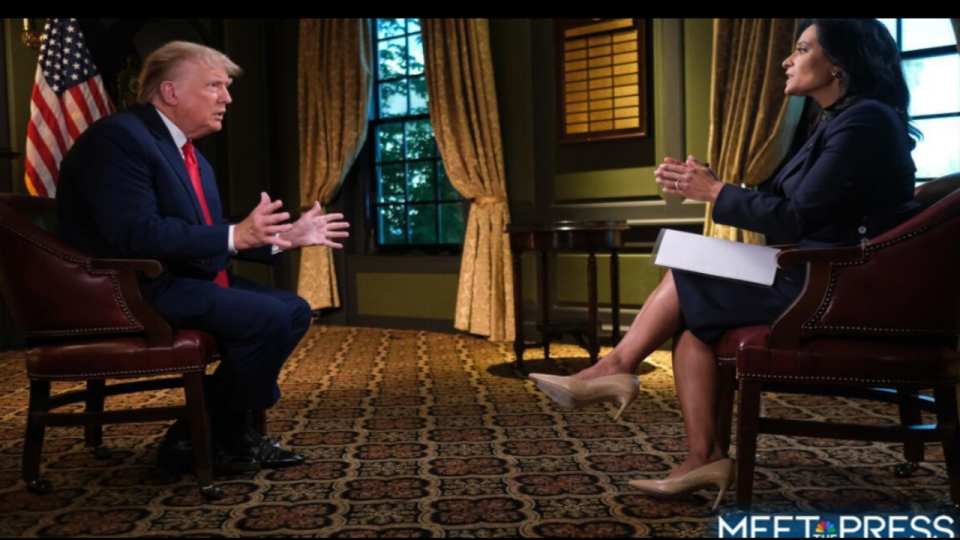
The Trump Meet the Press interview ended unexpectedly after a tense exchange with Kristen Welker. Trump criticized major media networks and defended his election fraud claims during the controversial discussion.
A highly anticipated Trump Meet the Press interview took a dramatic turn on Sunday when President abruptly ended his conversation with NBC moderator after a series of tense disagreements over election integrity, media credibility, and a controversial compensation proposal.
The interview, conducted in Wisconsin, quickly became one of the most talked-about political moments of the week as both sides repeatedly challenged each other’s claims.
Tension Builds Over Election Fraud Allegations
The discussion intensified when Welker questioned Trump about his continued assertions regarding election fraud in the 2020 presidential race.
Trump maintained that there was substantial evidence supporting his allegations and argued that election-related concerns remain an issue in several states. Welker countered by stating that no verified evidence had been presented to support those claims, leading to a sharp back-and-forth exchange.
As the conversation grew increasingly confrontational, Trump accused major news organizations of unfair coverage and bias against him.
Debate Over Proposed Anti-Weaponization Fund
Another major point of conflict involved Trump’s proposed compensation fund aimed at assisting individuals who claim they were unfairly targeted by government agencies during the administration of former President .
The proposal, reportedly valued at approximately $1.8 billion, has generated significant debate within political circles.
Welker pressed Trump on whether the administration still planned to move forward with the initiative after comments from Acting Attorney General Todd Blanche suggested otherwise.
Trump responded by saying he personally supports the concept and believes affected individuals deserve compensation. However, he acknowledged that any such proposal would still require official approval before implementation.
Trump Criticizes Mainstream Media Networks
During the final moments of the interview, Trump expanded his criticism beyond NBC, targeting several major television networks.
The president argued that large media organizations have lost public trust and accused them of presenting one-sided political coverage. He specifically criticized the media’s handling of election-related reporting and broader political issues.
The remarks marked another chapter in Trump’s long-running conflict with national news outlets, a theme that has remained central to his political career.
Interview Ends Abruptly
The interview concluded unexpectedly when Trump announced he had “had enough” and chose to end the discussion before all planned questions were completed.
Welker attempted to continue the conversation, reminding Trump that the network had traveled to Wisconsin for the sit-down interview. Trump responded that he had already devoted substantial time to the discussion and believed the interview had run its course.
The abrupt ending immediately sparked widespread debate across social media platforms, with supporters praising Trump’s decision to push back against media questioning while critics argued that he avoided accountability on key issues.
Political Reactions Flood Social Media
Following the broadcast, reactions poured in from across the political spectrum.
Trump supporters largely defended the president’s stance, arguing that mainstream media organizations frequently challenge Republican leaders more aggressively than Democrats. Critics, meanwhile, contended that journalists have a responsibility to question public officials on controversial claims and policy proposals.
The exchange has reignited discussions about media trust, political polarization, and the relationship between elected officials and news organizations ahead of future election cycles.
Why This Interview Matters
The dramatic ending of the Trump Meet the Press interview highlights the ongoing tension between political leaders and traditional media outlets. As debates over election security, government accountability, and media credibility continue to dominate national conversations, moments like this are likely to remain at the center of American political discourse.
Whether viewed as a defense against perceived media bias or as an avoidance of tough questions, the interview has once again placed Trump and the media relationship firmly in the spotlight.